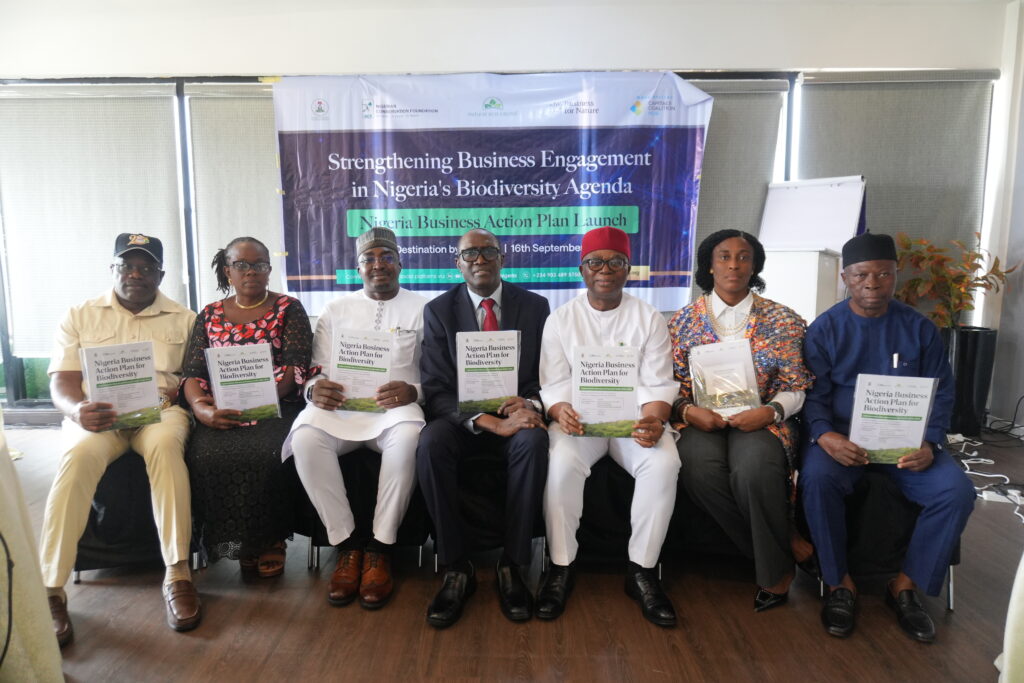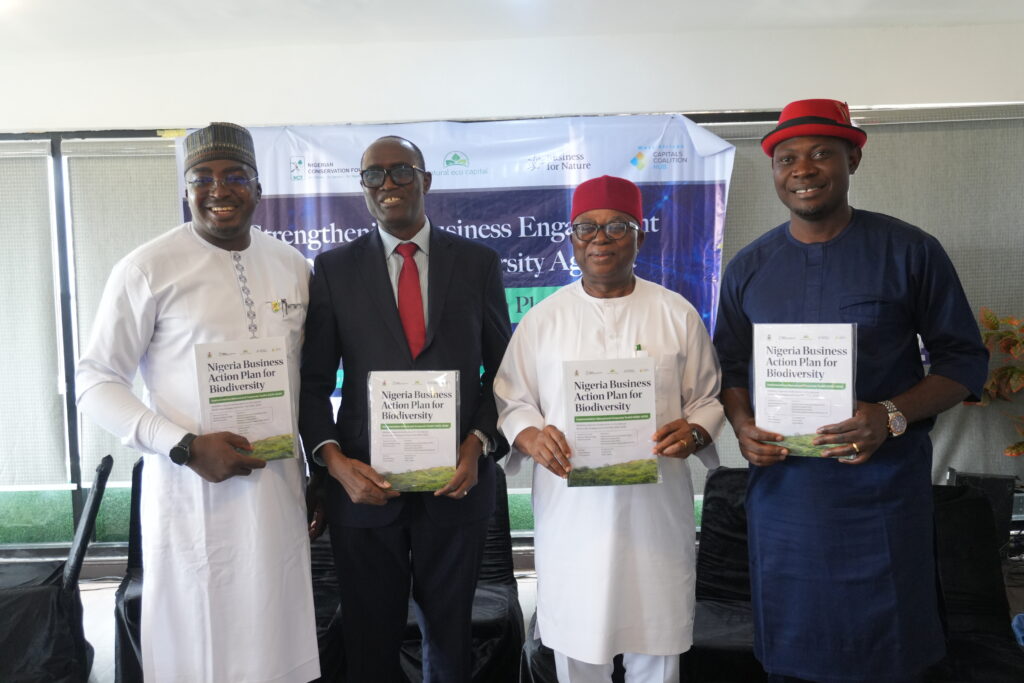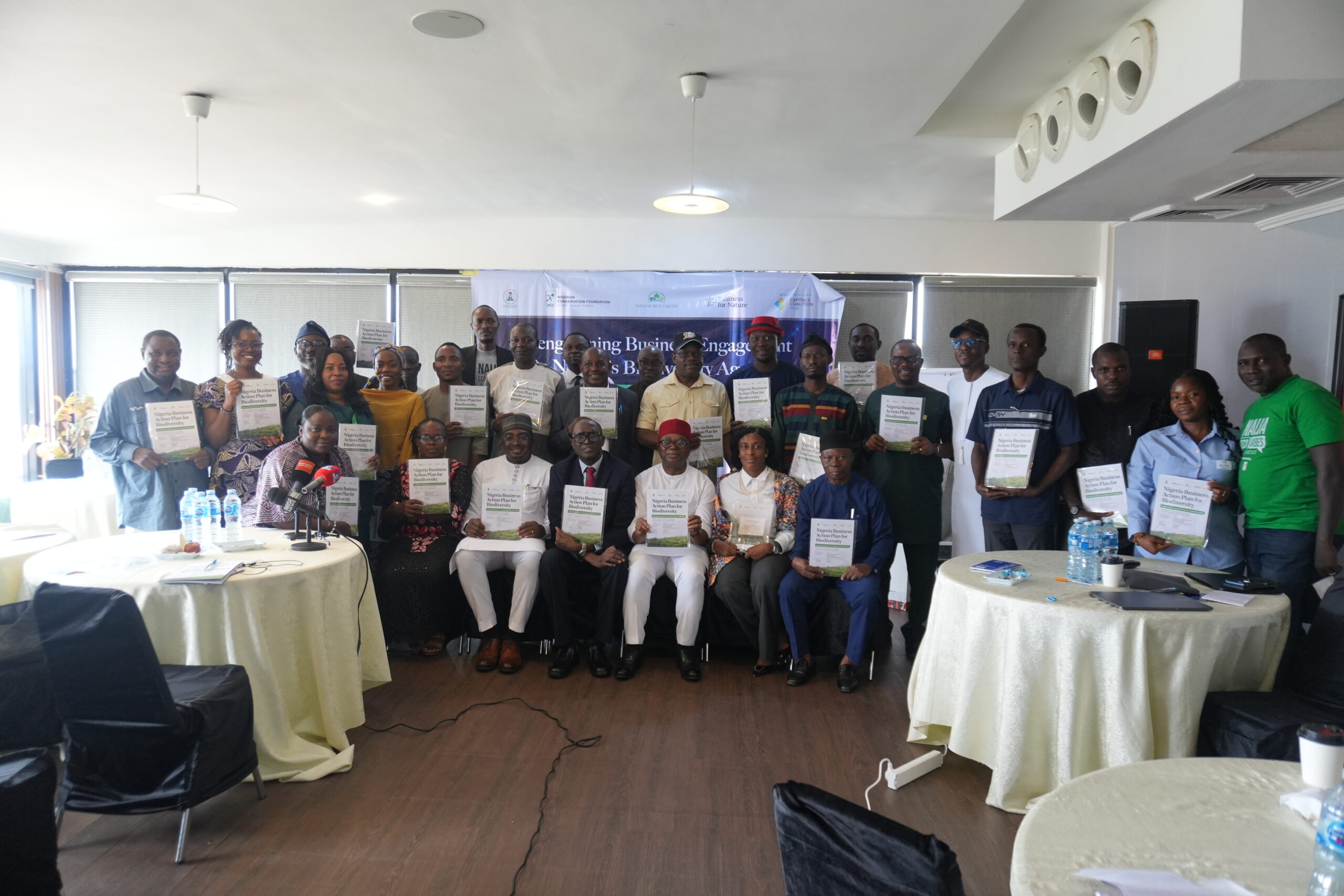
Abuja, Nigeria — 22 July 2026. Nigeria has taken a landmark step toward reversing biodiversity loss and strengthening climate‑resilient development with the release of the Nigeria Business Action Plan for Biodiversity (BAP) 2026–2030, a national implementation framework designed to mobilise private‑sector action for the country’s biodiversity targets under the National Biodiversity Strategy and Action Plan (NBSAP) 2025–2030.
Developed by the Business Advisory Group (BAG) in partnership with the Federal Ministry of Environment, the Nigerian Conservation Foundation (NCF), Natural Eco Capital (NEC), Business for Nature, and the West Africa Capitals Coalition Hub, the BAP provides what the Manual calls “a practical operating system for companies, financial institutions, industry associations, regulators, and implementation partners.”
The Manual emphasises that “Nigeria’s prosperity is inseparable from the condition of its forests, savannas, wetlands, rivers, coastal systems, soils, species and genetic resources.”
A Transformational Framework for Business and Finance
The BAP shifts biodiversity from CSR into core business governance, risk management, capital allocation, procurement, and disclosure. It introduces a seven‑stage Operating Cycle—Govern, Scope & Screen, Locate, Evaluate, Assess, Commit & Plan, Act, and Track/Assure/Disclose—ensuring that companies move from intention to measurable ecological outcomes.
Key Corporate Requirements
- Board‑approved nature policy and accountable executives
- Geospatial mapping of operations, suppliers, and value chains
- Baselines and DIRO (Dependencies, Impacts, Risks & Opportunities) registers
- Time‑bound, spatially explicit biodiversity targets
- Mitigation hierarchy: avoid → minimise → restore → offset
- Annual disclosure with proportionate independent assurance
Financial Sector Expectations
Banks, insurers, pension funds, DFIs, and capital‑market actors must integrate biodiversity into portfolio screening, sector policies, due diligence, covenants, stewardship, and sustainability reporting aligned with the FRC’s IFRS S1 roadmap.
Why This Matters for Development Finance Institutions (DFIs)
The BAP directly strengthens the enabling environment for sustainable finance in Africa by:
- Improving Risk Governance
DFIs gain clearer visibility into biodiversity‑related physical, transition, legal, and social risks across Nigerian sectors—agriculture, extractives, infrastructure, manufacturing, fisheries, and more.
- Enhancing Bankability of Nature‑Positive Projects
The Manual establishes integrity rules for biodiversity credits, offsets, blended finance, PES schemes, and conservation funds—reducing greenwashing and improving investor confidence.
- Aligning Nigeria with Global Frameworks
The BAP operationalises GBF Targets 14, 15, 18, and 19, enabling DFIs to support projects that meet emerging international safeguards and disclosure expectations.
- Creating a Pipeline for Nature Finance
Through its finance sequence and sector playbooks, the BAP helps identify credible, investable opportunities in restoration, regenerative agriculture, sustainable fisheries, watershed protection, and ecological infrastructure.
A National Collaboration for Nature‑Positive Growth
The BAP is part of the Nature‑Positive Nigeria Project, a multi‑stakeholder initiative uniting business, government, civil society, and technical partners to deliver measurable biodiversity outcomes by 2030.
The Implementation Manual outlines a controlled national delivery architecture, including:
- BAG governance and Secretariat
- Sector working groups
- State‑level coordination
- Annual national reporting
- Independent mid‑course evaluation (2029)
Looking Ahead to 2030
By 2030, participating businesses are expected to demonstrate:
- Reduced biodiversity pressures
- Improved ecosystem condition
- Verified restoration outcomes
- Strengthened community livelihoods
- Integrity‑screened biodiversity finance
- Decision‑useful, assured disclosures
The BAP positions Nigeria as a continental leader in nature‑related financial governance—offering DFIs a structured, credible platform to scale investments that protect ecosystems, strengthen resilience, and support inclusive prosperity.
Download the Business Action Plan HERE.
Contact
BAG Secretariat
Nigerian Conservation Foundation (NCF) info@ncfnigeria.org
Natural Eco Capital (NEC) info@ecopital.com